Vibin George
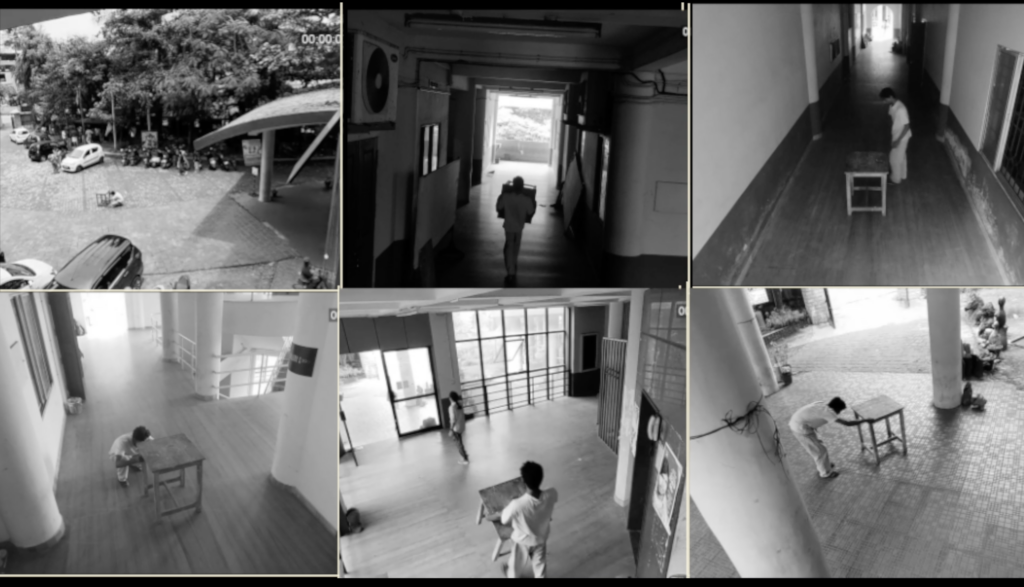
Even though art has its own material existence—whether as physical objects, ideas, or ephemerality —it cannot exist meaningfully without being entangled with regimes of power and knowledge. This means that the subjective criteria for becoming an artist have always been recognized and verified by larger institutional frameworks that legitimize what art is. In this sense, the historical figuration of the artist and artistic practice cannot be seen as natural phenomena. Rather, they are processes in which various inclusionary and exclusionary powers are involved. The modern institutional legitimization of artistic practice or the figure of the artist in the Indian context is often shaped through exclusionary powers that have produced a series of binaries within modern artistic and art historical discourse, such as art/craft, skill/experiment, and artist/artisan. One important point to note here is that, in India, even after independence, the hierarchical logic of divisions and exclusions has remained a historical constant. My point here is that the institutional maintenance of such divisions and exclusions is often sustained and reproduced by an uncritical view of its own pedagogic propositions. A colonial pedagogic system was adopted by art educational institutions in India and, apart from a few exceptions or alterations, continues to be followed. I am not going to elaborate on this complex history; rather, I would like to focus on a few observations from my own experience, both as a student who underwent such a pedagogic structure and as a pedagogue.
Let me start with a brief historical perspective on Kerala’s art education. Many unequal and essentialist approaches can be found when examining its history. The earliest recorded thoughts on establishing an art institution in Kerala date back to 1859, as seen in a letter Allan Brown wrote to T. Madhavarao, proposing a school that would employ the “slaves of the soil” (Pulliyars) in useful trades—an act he regarded as “real emancipation.” In 1872–73, the government established an ivory carving institution under the direction of a Brahmin, who designed patterns and supervised their execution, aiming to cultivate the carving skills in which Travancore workmen had already achieved significant eminence. When painting was introduced to the school in 1895–96, one of the conditions for admission was that the students be sons of artisans engaged in related industries. According to the 1901 census, there were 919 painters in the state, yet there are no available records regarding their names or the types of paintings they produced. Interestingly, art historical investigations reveal that the generation following Raja Ravi Varma did not emerge from the formal art school system but rather from a tradition of private apprenticeship, often under some of his kinsmen. Some of these earlier historical facts make it clear how caste hierarchy has played a crucial role in shaping and sustaining the pedagogic functions of art institutions in Kerala. In other words, while upholding caste hegemony, the primary role of early art institutions was to produce a laboring class drawn from specific caste communities.
I bring up this historical instance because we can trace contemporary echoes of these lineages when we closely examine the current state of fine arts education. The subjugating machinery that produces the “fine art student,” “the art teacher,” or the “artist” continues to inculcate a secondary sense of self within the institutional production of knowledge. In other words, artistic practice and its educational propositions are still not regarded as equal to other forms of knowledge production. This becomes evident when we consider how art teachers are still treated as secondary within academia, particularly in terms of salary benefits, despite holding advanced degrees and PhDs.
Let me elaborate a little further with the concept of ‘internalised oppression’ articulated by Anand Teltumbde. Internalized oppression refers to the phenomenon in which an oppressed group comes to believe, accept, or embody the inaccurate myths and stereotypes imposed upon them by their oppressors. In an educational context, this can manifest in students and teachers internalising societal beliefs about their capabilities and worth. In Kerala, this is reflected in the large number of students who do not pursue postgraduate programs, refrain from adopting creative art practices as their profession, or lack the confidence to assert their own artistic practice. Some students drop out of their academic studies, and tragically, a few even end their lives. Mental health issues are increasingly prevalent among students. The situation is not much different for the teaching staff. In most government fine arts educational institutions in Kerala, teachers are often overwhelmed with administrative responsibilities, leaving little room for meaningful pedagogical engagement. This burden gradually undermines their self respect, critical thinking, and confidence, allowing bureaucratic governance to dominate pedagogy, which, in turn, influences broader cultural discourses. Such unequal disciplinary divisions are not confined to fine arts education alone; similar disparities are apparent when comparing the humanities with the sciences. For instance, Sundar Sarukkai observes the secondary position occupied by the Humanities and Social Science departments in IITs and critiques the adoption of a “scientistic” perspective on liberal education, as reflected in policy documents such as the NEP. He emphasises the importance of recognising the fundamental differences between the humanities, social sciences, and sciences in their approaches to academic inquiry. Addressing the contemporary crisis faced by the humanities in an increasingly materialistic and “scientized” world, Sarukkai argues that humanities scholarship should respond by actively demonstrating its applicability rather than focusing solely on its utility. In his view, the notion of utility is framed from an instrumental perspective, whereas applicability—particularly when valued for its own sake—transcends such instrumental considerations. When we consider the new curriculum revision in Kerala under the Four-Year Undergraduate Programme (FYUGP), the situation remains unchanged in terms of recognizing the fundamental differences between the humanities, social sciences, and sciences in their approaches to academic inquiry. To illustrate this, let me elaborate on the recent developments in the Fine Arts section at RLV Government College within the framework of the FYUGP.
The Four-Year Undergraduate Program (FYUGP) represents one of the recent significant shifts in higher education in Kerala. As someone involved in revising the syllabus according to the structure provided by Mahatma Gandhi University and the Department of Higher Education, I can say that there are many structural issues that need to be addressed. At the implementation level, the basic structure of the FYUGP does not adequately recognise practice-based programs like Fine Arts. Despite the many new changes, fine arts education has not been given the attention it deserves. In fine arts education, the concepts of time, space, and object must be approached from a perspective different from the prevailing “scientistic” pattern. This program should be envisioned as an emergent practice. The new syllabus implemented under the FYUGP regulation at RLV Government College after 25 years is progressive in many respects but requires special attention regarding the distinct academic nature of fine arts. This oversight is not new. I suggest that, rather than assimilating visual arts programs into a structure designed for other humanities disciplines, there should be a tailored framework for the visual arts curriculum that considers its specific teaching methods and evaluation processes.
Apart from the above-mentioned issues, Fine Arts education has always been denied proper infrastructural Resources. What constitutes resources for fine arts education, and how are they denied? By “resources,” I refer to infrastructure—such as space and materials—and intangible elements like a visionary syllabus, committed teachers, visiting faculty, and other forms of academic support. But the crucial questions remain: Are there enough resources? And even if resources exist, are they suitable and feasible for a fine arts institution? Most infrastructural needs in government fine arts institutions are addressed with a generic education model, largely based on the framework used in arts and science institutions. However, the treatment of teaching faculties does not follow this same pattern. In Kerala, from the school level onward, fine arts teachers have been regarded as holding lesser positions than those teaching “serious” subjects. This disparity is evident not only in terms of respect but also in salary structures. Such structural anomalies within educational institutions reinforce hierarchical divisions.
How, then, do we conceptualise time, space, and material in the context of art education? What primary factors inhibit imaginative engagement in this domain? Typically, the education system imposes a standardised concept of time to meet systemic requirements and ensure that all assessable criteria are fulfilled. Yet, this raises critical questions: What exactly does the institution assess? What parameters guide this assessment? More importantly, should we even assess achievements when those parameters inherently vary for each student? These complexities become particularly pronounced within fine arts education, where creativity and individual expression challenge uniform evaluation standards.
I am not proposing or arguing anything new here. But the question remains: why does the same issue resurface in one form or another? An uncritical view of the structural anomalies in visual art pedagogy often reinforces and naturalises established beliefs and practices as truths. This, in turn, reproduces the hegemonic notion that creative abilities or genius are inherent dispositions of certain classes of people. We can observe how hegemonic structures operate within dominant social, cultural, and political frameworks to maintain the status quo by relegating certain forms of knowledge to a secondary position. This phenomenon can be described as a particular form of protected ignorance. Such ignorance stems from deeply ingrained cultural, social, and political structures shaped by historical processes. In the context of Prof. Y. S. Alone’s work, it is perpetuated through dominant narratives that privilege certain perspectives while marginalizing others, especially those from oppressed communities. This marginalization arises from a combination of historical legacies, cultural and social hierarchies, educational systems, institutional practices, modes of representation, and the suppression of alternative viewpoints.
Over the past fifty years, artistic practice has undergone profound transformations, influenced by various epistemological and political interventions such as feminism, feminist movements, Black politics, queer theory, and queer movements. These forces have played a pivotal role in expanding cultural production and challenging the traditional institutional frameworks that once defined art. Consequently, the boundaries of artistic practice have widened, enabling new forms of expression and opening up emancipatory possibilities within the cultural landscape. These transformations are not the result of an auto-genetic evolution of artistic practice. Rather, they are driven by recognising that art must be regarded as a form of critical knowledge production. In other words, we need to position criticality at the core of art. Achieving this requires a multifaceted approach, including critically examining pedagogical structures, institutional reforms, and an intense commitment to inclusivity and equity.
Vibin George
References
- Nandakumar, R. (2022). Insight and Outlook: Selected Essays on the Contemporary Art of Kerala.
- Teltumbde, A. (2010). The persistence of caste: The Khairlanji Murders and India’s Hidden Apartheid.
- Surukkai, Sundar (2019). A Blinkered View of Humanities Education?,Economic and Political Weekly, Vol. 54, Issue No. 32, 10 Aug.
- Alone, Y. S. (2017). Caste life narratives, visual representation, and protected ignorance. Biography, 40(1), 140–169. https://doi.org/10.1353/bio.2017.0007